How much rain and snow fell in Big Sky, Montana?
Change townBig Sky got 0.33 in of rain in the last 24 hours (to 9 AM MDT, Oct 11). Past 7 days: 0.33 in. This year: 5.11 in (19 percent of normal).
Yesterday and last night (24 hours to 6 AM MDT, Oct 10): no rain.
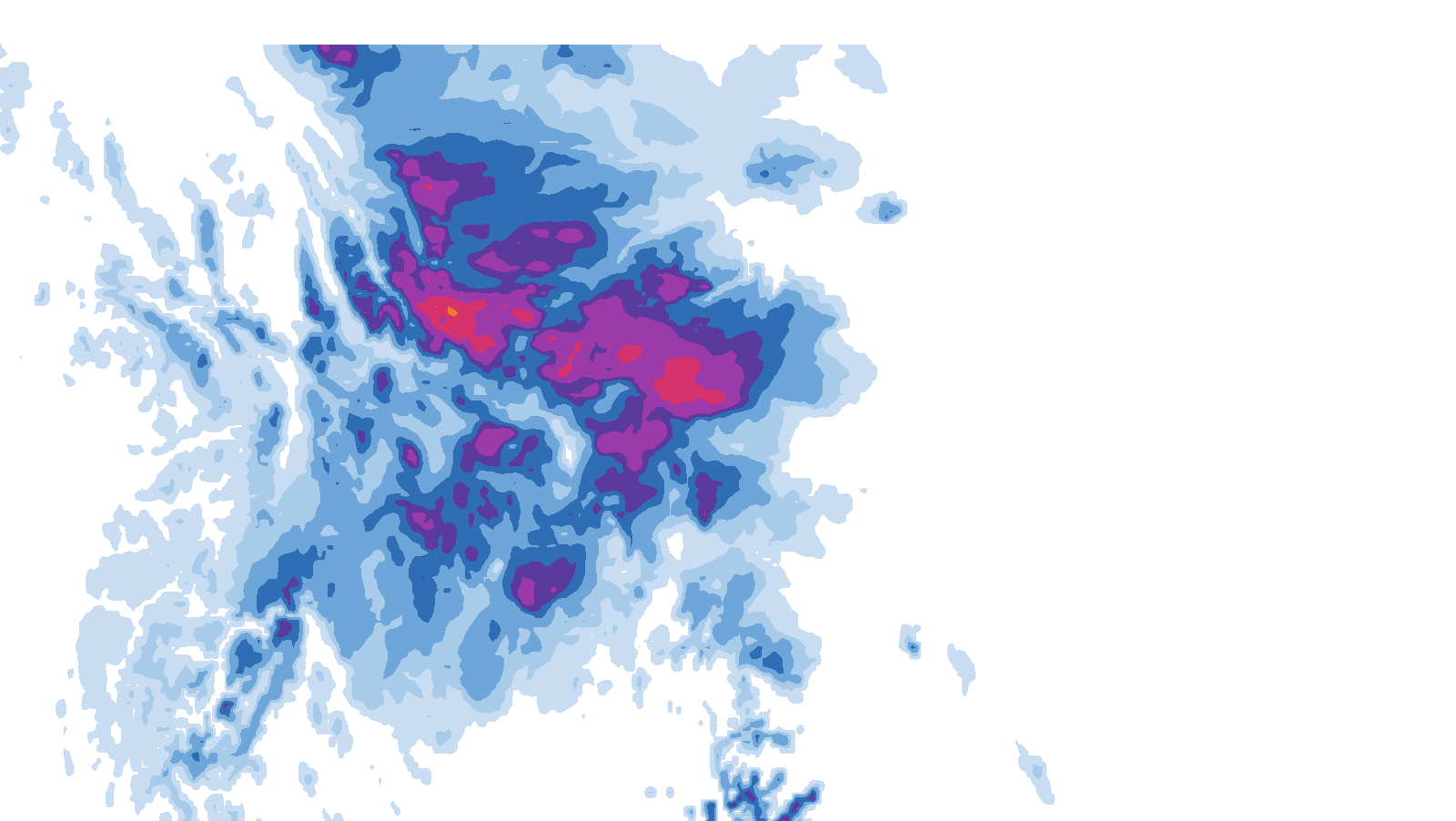
In the 24 hours to 6:00 AM MDT, Sunday, October 11, 2026
NOAA snow estimate
0.33 in melted to water radar estimate
In the 72 hours to 6:00 AM MDT, Sunday, October 11, 2026
NOAA snow estimate
0.33 in melted to water radar estimate
In the 7 days to 6:00 AM MDT, Sunday, October 11, 2026
NOAA snow estimate
0.33 in melted to water radar estimate
This month so far, Oct 1 to Oct 11, 2026
NOAA snow estimate
0.31 in melted to water radar estimate
This season so far, Oct 1, 2026 to Oct 11, 2026
NOAA snow estimate
- NOAA snow estimate
- Melted to water, estimated from weather radar
- Reads low at high elevation, often by about a quarter
Compared with normal
- Last 7 days0.30 in drier than normal (normal 0.63 in, Oct 5 to 11, Lone Mountain, 1991 to 2020)1991 to 2020 average (the official normal), NOAA station records, Lone Mountain
- This month0.67 in drier than normal (normal 0.98 in, Oct 1 to 11, Lone Mountain, 1991 to 2020)1991 to 2020 average, NOAA station records, Lone Mountain
- This year21.20 in drier than normal (normal 26.31 in, Jan 1 to Oct 11, Lone Mountain, 1991 to 2020)1991 to 2020 average, NOAA station records, Lone Mountain
Will this match my gauge? Each day here ends at 6:00 AM MDT, close to when volunteers read their rain gauges? (about 7 AM). How close we usually are

The most rain in a day in Big Sky since February 3, 2025, and the 1509th wettest day at Lone Mountain since 1991.
NOAA station records · Lone Mountain (USS0011D19S), 4.9 mi away · 1508 wetter days out of 12,170 on record, no ties. This storm: Oct 11 to Oct 11, 0.27 in of rain; its biggest day, Oct 11, was 0.27 in.
The last 14 days
Sep 27 to Oct 10, 2026New snow, inches (NOAA snow estimate)
Melted to water, inches (radar estimate)
Each bar is one day ending 6:00 AM MDT. T = a trace, too little to measure; n/m = not measured.? Every value is printed, so the chart reads without color.
October 2026, day by day
Tap a day to see its totalTap a day for its total.
Figures: rain, inches (radar estimate); new snow, inches (NOAA snow estimate). Striped days are not measured or not in the data; days marked not yet are after the latest day. Each day ends 6:00 AM MDT.
Total for a date range
Loading the total.
Rain goes back to Oct 14, 2020; snow to Oct 1, 2008. Days labeled by the date they end.
Every rain total for Big Sky
| Period | Rain |
|---|---|
| Last 24 hours, to 6:00 AM MDT Oct 11 | 0.33 in radar estimate |
| Last 72 hours | 0.33 in radar estimate |
| Last 7 days | 0.33 in radar estimate |
| This month so far | 0.31 in radar estimate |
| This year, 2026 so far | 5.11 in radar estimate |
Every snow total
| Period | New snow |
|---|---|
| Last 24 hours | 0.3 in NOAA snow estimate |
| Last 72 hours | 0.3 in NOAA snow estimate |
| Last 7 days | not measured |
| This month so far | not measured |
| This season so far | not measured |
Big Sky at a glance
Big Sky is in Montana, at about 6,907 ft above sea level at its Census center point.
The weather station's records since 1991 come from Lone Mountain, 4.9 miles away.
The wettest day on record at Lone Mountain was 2.00 in on October 22, 2022.
From Sep 27 to Oct 10, Big Sky had no measurable rain on any of the 14 days with data, by weather radar.
Nearby Montana towns
| Town | From Big Sky | 24 hours | 7 days |
|---|---|---|---|
| Bozeman rain totals (32.4 mi) | 32.4 mi northeast | 0.39 in | 0.40 in |
Rain totals are estimated from weather radar (NOAA). Distance is in a straight line between Census center points.
Nearby rain gauges (read by volunteers)
within 15 milesNo rain gauge read by a volunteer within 15 miles reported today.
Volunteer gauge reports: CoCoRaHS (cocorahs.org), CC BY 3.0. Measured by hand once a day; report date October 11, 2026. Shown as measured, not edited.
How close? Radar rain estimates are usually within about 10 to 15 percent of a rain gauge in your yard. City snow totals are usually within about 25 percent or 1 inch of what volunteers measure. Mountain towns read low, often by about a quarter. Method and accuracy